Saturday, 17 February 2024

Economy:** 経済 (keizai)


1. Today's Japanese words

Here are some basic Japanese vocabulary words related to the economy, along with their romaji pronunciation:


* **Economy:** 経済 (keizai)

* **Money:** お金 (okane)

* **Company:** 会社 (kaisha)

* **Job:** 仕事 (shigoto)

* **Salary:** 給料 (kyuryo)

* **Price:** 値段 ( nedan)

* **Tax:** 税金 (zei kin)

* **Market:** 市場 (ichiba)

* **Investment:** 投資 (toshi)

* **Growth:** 成長 (seichō)

* **Inflation:** インフレ (infure)

* **Deflation:** デフレ (defure)

* **Debt:** 借金 (shakkin)


2. Today's topic

The Japanese economy after World War II was a story of remarkable transformation, rising from the ashes of devastation to become one of the world's leading economic powers. 


**From devastation to recovery (1945-1950s):**


* **Utter destruction:** The war left Japan's cities in ruins, its industries crippled, and its people facing food shortages and hyperinflation.

* **Allied occupation:** The Allied occupation, led by the United States, implemented economic reforms aimed at demilitarization, democratization, and reviving the economy.

* **Dodge Plan:** This 1949 program stabilized the currency, curbed inflation, and encouraged exports, laying the foundation for growth.


**The era of rapid growth (1960s-1970s):**


* **Japanese miracle:** Japan's economy soared, fueled by factors like government-business cooperation, export-oriented industries, and a highly skilled workforce.

* **Growth engines:** Key sectors like steel, shipbuilding, and automobiles boomed, making Japan a global manufacturing powerhouse.


**Challenges and transitions (1980s-present):**


* **The Plaza Accord (1985):** This agreement led to a sharp appreciation of the yen, making exports less competitive and triggering a slowdown.

* **The "Lost Decades":** Slow growth, asset price bubbles, and financial crises plagued the Japanese economy for much of the 1990s and 2000s.

* **Present day:** Japan faces challenges like an aging population, deflation, and global competition, but it remains a major economic player with advanced technology and a focus on innovation.


3- Today’s news

Japan’s GDP falls behind Germany to fourth place amid weak yen

https://www.asahi.com/sp/ajw/articles/15168705


Kishida, Yoon may see Ohtani debut during Seoul summit

https://www.asahi.com/sp/ajw/articles/15166425

Thursday, 15 February 2024

いわいごと (iwaigoto)


 1. Today's Japanese words

## Basic Japanese Vocabulary about Celebration (Romaji):

**General words:**

* **いわいごと (iwaigoto)**: celebration, event
* **お祝い (oiwai)**: congratulation, celebration
* **おめでとう (omedetou)**: congratulations
* **祝う (iwau)**: to celebrate
* **楽しむ (tanoshimu)**: to enjoy
* **集まる (atsumaru)**: to gather

**Events:**

* **誕生日 (tanjōbi)**: birthday
* **結婚 (kekkon)**: marriage
* **卒業 (sotsugyō)**: graduation
* **入学 (nyūgaku)**: entrance
* **成人 (seijin)**: coming of age
* **祭り (matsuri)**: festival
* **花火 (hanabi)**: fireworks
* **花見 (hanami)**: flower viewing (cherry blossom or other)

**Food and drink:**

* **ケーキ (kēki)**: cake
* **シャンパン (shanpan)**: champagne
* **お酒 (sake)**: alcohol
* **乾杯 (kanpai)**: cheers

**Other words:**

* **プレゼント (purezento)**: present, gift
* **飾り (kazari)**: decoration
* **音楽 (ongaku)**: music
* **踊り (odori)**: dance
* **幸せ (shiawase)**: happiness

**Tips:**

* Remember to use **お (o)** or **ご (go)** before nouns to make them more polite, especially for strangers or elders.
* Use **さん (san)** after someone's name to show respect.
* You can combine words to make phrases, for example: 誕生日おめでとう (tanjōbi omedetou) - happy birthday.

2. Today's topic
Hinamatsuri, also known as Girls' Day or Doll Festival, is a beautiful annual celebration held in Japan on March 3rd of each year. It's a special day dedicated to wishing for the health, happiness, and prosperity of young girls. Here's a breakdown of the key aspects:

**Traditions:**

* **Hina Doll Display:** The centerpiece of Hinamatsuri is a multi-tiered display of ornamental dolls called "hina-ningyō". These dolls, dressed in elaborate Heian period court attire, represent the Emperor, Empress, attendants, and musicians. The number of tiers can vary, with seven tiers being the most traditional and elaborate.
* **Festive Food:** Special food is prepared and enjoyed on this day. Some popular dishes include "chirashizushi" (scattered sushi), "hina-arare" (rice crackers), "shirozake" (sweet rice wine), and "hisamochi" (diamond-shaped mochi).
* **Prayers and Wishes:** Families gather to pray for the well-being of their daughters and all young girls. They offer prayers and wishes for their happiness, success, and good health.

**Significance:**

* **Celebrating Girls:** Hinamatsuri serves as a special day to appreciate and celebrate young girls. It's a time for families to gather, share stories, and show their love and support.
* **Seasonal Connection:** March 3rd marks the beginning of spring in Japan. The vibrant colors and themes associated with Hinamatsuri reflect the joy and renewal associated with the season.
* **Cultural Tradition:** Hinamatsuri is a deeply rooted cultural tradition in Japan, passed down through generations. It offers a glimpse into the values and customs of Japanese society.

**Additional Notes:**

* While traditionally celebrated in homes, Hinamatsuri displays can also be seen in public spaces like schools and community centers.
* The dolls are typically put away after the festival, with some families believing leaving them out could lead to a late marriage for the daughter.
* Although primarily focused on girls, Hinamatsuri is increasingly celebrated as a more general day of family togetherness and enjoyment.

3- Today’s news
Kishida, Yoon may see Ohtani debut during Seoul summit
https://www.asahi.com/sp/ajw/articles/15166425

Corridor of 10,000 Girls’ Day dolls dazzles at Nagoya hotel
https://www.asahi.com/sp/ajw/articles/15153811
The annual exhibition runs until March 3, the day of “Hinamatsuri” or “Girls’ Day,” a celebration featuring hina dolls.
The hanging Hina doll decorations, which date to the late Edo Period (1603-1867), wish for the healthy growth of baby girls and good fortune in their future marriages.

Wednesday, 14 February 2024

外交 (gaikō) - diplomacy


1. Today's Japanese words

* 外交 (がいこう、gaikō) - diplomacy

* 国際関係 (こくさいかんけい、kokusai kankei) - international relations

* 大使 (たいし、taishi) - ambassador

* 領事 (りょうじ、ryōji) - consul

* 条約 (じょうやく、jōyaku) - treaty

* 協定 (きょうてい、kyōtei) - agreement

* 友好国 (ゆうこうこく、yūhōkoku) - friendly nation

* 同盟国 (どうめいこく、dōmeikoku) - allied nation

* 紛争 (ふんそう、funsou) - dispute

* 仲裁 (ちゅうさい、chūsai) - arbitration

* 外務省 (がいむしょう、gaimushō) - Ministry of Foreign Affairs


2. Today's topic

Indonesia and Japan enjoy a strong and multifaceted relationship built on historical, economic, and political ties. Here's a brief overview:


Historical Ties:


The two countries established diplomatic relations in 1958.

During World War II, Japan occupied the Dutch East Indies (present-day Indonesia) from 1942 to 1945. This period had a complex and sometimes difficult legacy, but both nations have moved forward with reconciliation and friendship.

Economic Ties:


Japan is Indonesia's third-largest trading partner, with bilateral trade exceeding $42 billion in 2022.

Japan is a major source of foreign direct investment in Indonesia, with over 1,000 Japanese companies operating in the country.

Indonesia is a vital supplier of natural resources to Japan, such as liquefied natural gas and coal.

Japanese brands are popular in Indonesia, particularly in the automotive and electronics sectors.


Political Ties:


Both countries are democracies and members of the G20, ASEAN, and APEC.

They cooperate on regional and global issues, such as maritime security, counter-terrorism, and climate change.

Japan provides development assistance to Indonesia, focusing on infrastructure, education, and healthcare.


Cultural Ties:


There is a growing interest in Japanese culture in Indonesia, particularly anime, manga, and popular music.

Many Indonesians study Japanese language and culture.

There are cultural exchange programs and events held regularly between the two countries.


Overall, the relationship between Indonesia and Japan is strong and growing. Both countries see each other as important partners in the region and the world.


3- Today’s news

Indonesia election results live: Prabowo claims presidential race victory

https://www.thejakartapost.com/indonesia/2024/02/14/prabowo-sees-strong-lead-in-preliminary-counts.html


Monday, 12 February 2024

Cleaning(Souji)


1. Today's Japanese words
## Basic Japanese Vocabulary related to Cleaning (Romaji):
**Verbs:**

* 掃除する (sōji suru) - to clean
* 片付ける (かたづける) (katadzukeru) - to tidy up, put away
* 洗う (arau) - to wash
* 拭く (ふく) (fuku) - to wipe
* 掃く (ほうき) (hōki) - to sweep
* 磨く (みがく) (migaku) - to polish
* ゴミを出す (gomi o dasu) - to take out the trash
* 洗濯する (sentaku suru) - to do laundry

**Nouns:**

* 掃除機 (sōjiki) - vacuum cleaner
* 雑巾 (ぞうきん) (zōkin) - cleaning cloth
* モップ (moppu) - mop
* ブラシ (burāshi) - brush
* スポンジ (suponji) - sponge
* 洗剤 (senta剤) - detergent
* ゴミ箱 (gomi bako) - trash can
* 洗濯機 (sentakuki) - washing machine
* 洗濯物 (sentakumono) - laundry

**Adjectives:**

* きれい (kirei) - clean
* 汚い (きたない) (kitanai) - dirty
* きれいにする (kirei ni suru) - to make clean
* 汚れる (yogoreru) - to get dirty

**Phrases:**

* 掃除をしてください (sōji o shite kudasai) - Please clean.
* ゴミを捨ててください (gomi o捨ててください) - Please throw away the trash.
* 洗濯物を干してください (sentakumono o hoshite kudasai) - Please hang up the laundry.
* きれいにしましょう (kirei ni shimashou) - Let's clean up.

2. Today's topic
The cleaning culture in Japan is fascinating and multi-faceted, with practices deeply embedded in tradition, community spirit, and even religious beliefs. Here are some key aspects:

Emphasis on personal responsibility:

From a young age: Children learn the importance of cleaning at home and school. In schools, students themselves clean classrooms and facilities, fostering responsibility and ownership.
Carrying over: This translates into adulthood, where individuals clean their homes, workplaces, and even public spaces without needing prompting.

Community participation:

Volunteer clean-ups: Many neighborhoods organize regular clean-up events where residents gather to collect trash, promoting community bonding and environmental awareness.
Respect for shared spaces: People avoid littering and generally maintain common areas, showing respect for their surroundings and others.

Religious influences:

Purity in Shinto and Buddhism: Both religions emphasize cleanliness as a way to purify oneself and show respect for deities and nature. Rituals like handwashing at shrines exemplify this connection.
Maintaining harmony: Keeping things clean reflects the cultural value of maintaining harmony and order within oneself and the environment.

Practical aspects:

Densely populated: In a limited space, cleanliness becomes essential for hygiene and comfort.
Humidity control: Regular cleaning helps prevent mold and mildew growth in humid climates.

Additional points:

Specialized tools and techniques: Japan has a wide range of unique cleaning tools and methods, reflecting their dedication to the practice.
Aesthetic appreciation: Cleanliness goes beyond hygiene; it's about creating a sense of beauty and order in living spaces.

It's important to note that, like any culture, Japan's cleaning practices aren't perfect. Individual experiences may vary, and there can be social pressure to conform to expectations. However, understanding the cultural context helps appreciate the deep-rooted values and principles behind this unique aspect of Japanese society.

3- Today’s news
Japan's culture of school cleaning
https://www3.nhk.or.jp/nhkworld/en/news/videos/20240213110159760/

A school that provides rehabilitation education for juvenile delinquents
Mother, look. Spartan education of cleaning toilets with bare hands (40 years ago)
https://www.tiktok.com/@shoyu.wasabi/video/7090078510437420289

Friday, 9 February 2024

Shūkyō (宗教):** Religion


1. Today's Japanese words

 ## Basic Japanese Vocabulary About Religion (Romaji):

**General:**

* **Shūkyō (宗教):** Religion
* **Shinja (信仰):** Belief, faith
* **Kami (神):** Shinto spirits
* **Butsudō (仏教):** Buddhism
* **Jisha (寺社):** Temple or shrine
* **Reipai (礼拝):** Worship, prayer
* **Gyouji (行事):** Religious ceremony, event
* **Bon (盆):** Buddhist festival honoring ancestors

**Shinto:**

* **Jinja (神社):** Shinto shrine
* **Torii (鳥居):** Gate leading to a Shinto shrine
* **Gohoubi (御神酒):** Sake offering to kami
* **Omamori (御守):** Amulet for luck or protection
* **Matsuri (祭り):** Shinto festival
* **Miko (巫女):** Shinto priestess

**Buddhism:**

* **Otera (寺院):** Buddhist temple
* **Butsuzō (仏像):** Buddhist statue
* **Goma (護摩):** Fire ritual
* **Zazen (座禅):** Meditation
* **Nenbutsu (念仏):** Chanting the name of the Buddha
* **Bosatsu (菩薩):** Buddhist enlightened beings

**Other:**

* **Kansha (感謝):** Gratitude
* **Kisei (祈願):** Prayer, wish
* **Goen (御縁):** Fate, karma
* **Meifu (冥府):** Afterlife

2. Today's topic
## Understanding Japanese Religion: A Blend of Beliefs

Japan's religious landscape is unique, marked by a **syncretic** approach where several traditions coexist and even intertwine. Here's a breakdown of the key players:

**1. Shinto:**

* **Indigenous to Japan:** Shinto, meaning "way of the kami," focuses on worshipping *kami*, spirits believed to inhabit nature and objects.
* **Ritualistic practices:** Shinto emphasizes rituals like visiting shrines, making offerings, and maintaining purity. These practices aim to foster harmony with the kami and seek blessings.
* **Ancestral reverence:** Ancestor veneration plays a significant role, with families honoring deceased relatives through rituals and offerings.
* **Nature connection:** Shinto emphasizes respect for nature, evident in the sacred status given to mountains, trees, and other natural elements.

**2. Buddhism:**

* **Imported from mainland Asia:** Introduced in the 6th century, Buddhism offered philosophical and spiritual teachings alongside Shinto's focus on rituals.
* **Multiple schools:** Diverse Buddhist schools like Zen and Pure Land exist, each emphasizing different aspects of the path to enlightenment.
* **Focus on personal growth:** Buddhist practices like meditation and ethical living aim to help individuals achieve inner peace and liberation from suffering.
* **Complementary roles:** Interestingly, many Japanese practice both Shinto and Buddhist rituals without considering them mutually exclusive.

**Key Points:**

* **No dominant religion:** Unlike many countries, Japan lacks a single dominant religion. People often identify with elements of both Shinto and Buddhism.
* **Syncretism:** The blending of Shinto and Buddhist practices and beliefs is a defining characteristic of Japanese religion.
* **Secularism:** Despite the prevalence of religious practices, Japan's constitution upholds religious freedom and separation of state and religion.
* **Modern trends:** Religious participation has declined in recent decades, with younger generations showing less affiliation with formal religious institutions.

**Beyond Shinto and Buddhism:**

While these two traditions dominate, other influences exist:

* **Confucianism:** Ethical and social values derived from Confucianism have significantly shaped Japanese culture and behavior.
* **New religious movements:** Since the 19th century, several new religious movements have emerged, attracting some followers.
* **Christianity:** Though a minority, Christian communities exist, particularly in urban areas.

3- Today’s news
Malaysia’s top court invalidates Sharia state laws, provoking Islamist backlash
https://www.asahi.com/sp/ajw/articles/15157850
JR East to test avatar staff robots at 2 Tokyo area stations
https://mainichi.jp/english/articles/20240209/p2a/00m/0bu/026000c

将棋 (shogi) - Shogi


1. Today's Japanese words

 将棋 (shogi) - Shogi

盤 (ban) - board

駒 (koma) - piece

手 (te) - move

王 (ō) - king

玉 (gyoku) - another word for king

勝ち (kachi) - win

負け (make) - lose

引き分け (hikiwake) - draw (very rare in Shogi)

Piece Names:


飛車 (hisha) - rook

角行 (kakugyō) - bishop

金 (kin) - gold general (strongest piece)

銀 (gin) - silver general

歩 (fu) - pawn

香車 (kyōsha) - lance

桂馬 (keima) - knight

Piece Actions:


打つ (utsu) - play (a move)

取る (toru) - capture

捨てる (suteru) - sacrifice

詰む (tsumu) - checkmate

王手 (ōte) - check

Game Phases:


初期配置 (shoki haichi) - initial position

中盤 (chūban) - middlegame

終盤 (shūban) - endgame

Other:


詰将棋 (tsumeshogi) - checkmate puzzle

定跡 (jōseki) - opening theory

戦法 (senpō) - strategy

順位戦 (junisen) - professional ranking tournament


2. Today's topic

Shogi(将棋), also known as Japanese chess, is a two-player strategy board game that is considered one of the most popular board games in Japan. It is part of the same family of games as Western chess, chaturanga, xiangqi, and janggi. The word "Shogi" literally means "the game of the generals," reflecting the military theme of the pieces.


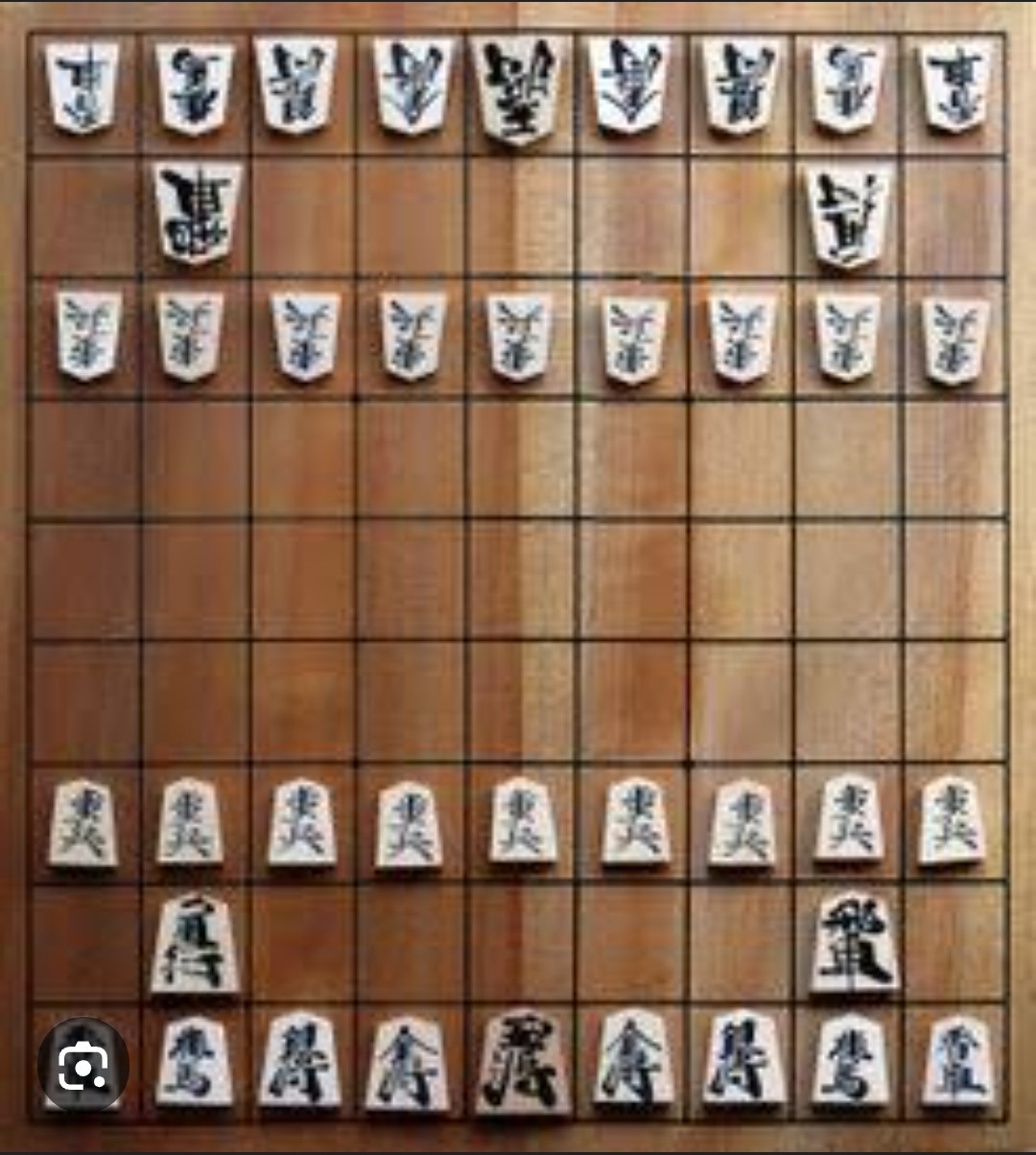
Shogi board game

Shogi is played on a 9x9 board with 20 pieces each for two players. The pieces are divided into two groups: the home pieces and the captured pieces. Each piece has a unique movement pattern, and the goal of the game is to checkmate the opponent's king.


One of the key differences between Shogi and Western chess is that captured pieces can be re-entered onto the board by the capturing player, adding an extra layer of complexity and strategy to the game. This unique feature also makes draws very rare in Shogi.


Shogi is enjoyed by people of all ages and skill levels in Japan. There are professional Shogi players, amateur tournaments, and even Shogi clubs in schools and community centers. The game is considered to be a valuable educational tool, as it helps to develop critical thinking, problem-solving, and strategic planning skills.


If you are interested in learning more about Shogi, there are many resources available online and in libraries. There are also Shogi clubs and organizations in many countries around the world.


3- Today’s news

Lantern festival in Nagasaki returning fully after 4 years

https://www.asahi.com/ajw/articles/15155707


Shogi star Fujii renews record for title match winning streak

https://www.japantimes.co.jp/news/2024/02/09/japan/shogi-sota-fujii-new-record/


Wednesday, 7 February 2024

Animal-Doubutsu


1. Today's Japanese words

 I'd be happy to provide some basic Japanese vocabulary about animals, with romaji for pronunciation! Here's a starting point:


**General:**


* 動物 (dōbutsu) - animal

* 飼う (kau) - to raise, keep (an animal)

* 好き (suki) - to like

* 嫌い (kirai) - to dislike

* かわいい (kawaii) - cute

* 危険 (kiken) - dangerous


**Common Animals:**


* 犬 (inu) - dog

* 猫 (neko) - cat

* 鳥 (tori) - bird

* 魚 (sakana) - fish

* 馬 (uma) - horse

* 牛 (ushi) - cow

* 豚 (buta) - pig

* 猿 (saru) - monkey

* ゾウ (zou) - elephant

* ライオン (raion) - lion

* トラ (tora) - tiger

* キリン (kirin) - giraffe

* ウサギ (usagi) - rabbit

* パンダ (panda) - panda

* カエル (kaeru) - frog

* ヘビ (hebi) - snake

* ハチ (hachi) - bee

* チョウ (chou) - butterfly

* カブトムシ (kabutomushi) - rhinoceros beetle

* セミ (semi) - cicada


**Actions:**


* 食べる (taberu) - to eat

* 遊ぶ (asobu) - to play

* 寝る (neru) - to sleep

* 走る (hasu) - to run

* 泳ぐ (oyogu) - to swim

* 飛ぶ (tobu) - to fly


**Sounds:**


* 鳴く (naku) - to make a sound (general animal sound)

* ほえる (hoeru) - to bark (dog)

* ニャー (nyā) - to meow (cat)

* ピヨピヨ (piyopiyo) - to chirp (bird)


**Phrases:**


* 犬を飼っています。(inu o katte imasu) - I have a dog.

* 猫が好きです。(neko ga suki desu) - I like cats.

* ライオンは危険です。(raion wa kiken desu) - Lions are dangerous.

* 鳥は空を飛びます。(tori wa sora o tobimasu) - Birds fly in the sky.

* 魚は水の中で泳ぎます。(sakana wa mizu no naka o oyogimasu) - Fish swim in the water.


**Additional Tips:**


* Use counters: Use specific counters depending on the animal when counting. For example, 一匹 (ippiki) for dogs and cats, 一羽 (ippen) for birds, and 一頭 (itō) for horses and cows.


2. Today's topic

Japan boasts a diverse range of wildlife, encompassing around 90,000 species! 


**Mammals:**


* **Endemic stars:** Japan is home to unique mammals like the Japanese macaque, known for its hot spring-loving ways, and the adorable Amami rabbit, found only on Amami Island.

* **Forest dwellers:** Dense woodlands harbor the elusive Japanese marten and the agile Japanese squirrel, while the mountainous regions are home to the majestic sika deer and the powerful brown bear (in Hokkaido).

* **Other notable mentions:** Keep an eye out for wild boars, raccoon dogs with their distinctive masks, and the endangered Iriomote cat, a solitary feline native to the Ryukyu Islands.


**Birds:**


* **Showy and colorful:** The vibrant Japanese pheasant and the elegant red-crowned crane are iconic sights, while the Okinawa woodpecker adds a splash of red to the southern islands.

* **Smaller charmers:** Look for the melodious Japanese wagtail, the industrious grey-capped pygmy woodpecker, and the adorable Japanese quail, a national bird.

* **Migratory marvels:** During winter, Hokkaido welcomes majestic birds like Steller's sea eagles and Blakiston's fish owls, while spring brings flocks of warblers and buntings.


**Reptiles and Amphibians:**


* **Island giants:** The Ryukyu Islands boast the impressive Ryukyu golden tree frog and the enormous Habu snake, both top predators in their ecosystems.

* **Endemic gems:** Japan has numerous endemic amphibians and reptiles, including the colorful Japanese fire belly newt and the smooth-skinned Yaeyama habu snake.

* **Underwater wonders:** Marine turtles like the loggerhead and green turtle grace Japan's waters, while the unique Ryukyu spiny turtle lives in freshwater habitats.


**Marine Life:**


* **Ocean giants:** Whales like the humpback and sperm whale migrate through Japanese waters, while dolphins and seals can be spotted along the coasts.

* **Colorful reefs:** Coral reefs teeming with fish, from the vibrantly colored clownfish to the regal Napoleon wrasse, are a highlight of the Ryukyu Islands.

* **Unique species:** The giant Pacific octopus, with its impressive intelligence, and the elusive Japanese giant salamander, the world's largest amphibian, add to the underwater marvels.


3- Today’s news

Officials lose sight of orcas trapped by drift ice off Hokkaido

https://www.asahi.com/sp/ajw/articles/15153103


3 yrs after coup, Japan group strives to aid displaced Myanmar people

https://mainichi.jp/english/articles/20240207/p2g/00m/0in/027000c


Thursday, 1 February 2024

History-Rekishi

 1. Today's Japanese words

 ## Japanese Vocabulary about the Relation to History with Romaji:


**General Terms:**


* **Rekishi (歴史):** History

* **Kaishaku (解釈):** Interpretation

* **Bunseki (分析):** Analysis

* **Kakei (家系):** Lineage, Genealogy

* **Ibutsu (遺物):** Artifacts

* **Iseki (遺跡):** Historical Site

* **Koto (古都):** Ancient Capital

* **Denki (伝記):** Biography

* **Jidaigeki (時代劇):** Period Drama (TV genre)


**Concepts:**


* **Rekishikan (歴史観):** View of History

* **Rekishi ishiki (歴史意識):** Historical Consciousness

* **Rensetsu(連接):** Continuity

* Hensen (変遷):** Change, Transformation

* Kakushin (革新):** Revolution

* Zōdai(増大):** Expansion

* Suitai (衰退):** Decline

* Kikyō (帰郷):** Homecoming, Returning to History

**Verbs:**


* Manabu (学ぶ):** To learn

* Kenkyū suru (研究する):** To research

* Tsutaeru (伝える):** To transmit

* Hozon suru (保存する):** To preserve

* Kaitei suru (改訂する):** To revise


2. Today's topic

Japanese history is rich and complex, spanning thousands of years. To give you a good overview, I'll break it down into different periods:

Early Japan (until 710):

Jomon Period (13,000 BC - 1,000 BC): Characterized by hunter-gatherer societies and impressive cord-marked pottery.

Yayoi Period (1,000 BC - 300 AD): Arrival of rice cultivation and metalworking from mainland Asia, leading to settled communities and social hierarchies.

Classical Japan (710 - 1573):

Nara Period (710 - 794): First permanent capital established in Nara, strong influence of Chinese culture and Buddhism.

Heian Period (794 - 1185): Capital moved to Kyoto, flourishing of aristocratic culture with literature, poetry, and art like The Tale of Genji.

Kamakura Period (1185 - 1333): Rise of the samurai class and establishment of a military government in Kamakura.

Muromachi Period (1333 - 1573): Return of power to the emperor in Kyoto, but constant warfare between rival samurai clans.

Early Modern Japan (1573 - 1868):

Azuchi-Momoyama Period (1573 - 1603): Unification of Japan by powerful warlords like Oda Nobunaga and Toyotomi Hideyoshi.

Edo Period (1603 - 1868): Tokugawa shogunate establishes stable rule for over 260 years, isolationist policies and flourishing of arts and culture like kabuki theater.

Modern and Contemporary Japan (1868 - present):

Meiji Restoration (1868): End of feudalism and modernization of Japan, rapid industrialization and adoption of Western culture.

Taisho Period (1912 - 1926): Rise of democracy and Taisho Democracy movement, but also growing militarism.

Showa Period (1926 - 1989): Expansionism and involvement in World War II, followed by defeat and American occupation.

Postwar Period (1945 - present): Reconstruction, adoption of a new pacifist constitution, and rise to become a major economic power.


3- Today’s news

Top 10 historical buildings in KL

Sun Sze Si Ya Temple

https://www.thestar.com.my/metro/metro-news/2024/02/01/top-10historical-buildings-in-kl

Guan Di Temple

Lee Rubber Building

Sri Maha Mariamman Temple

Vivekananda Ashrama

Muzium Negara

St Mary’s Cathedral

Panggung Bandaraya

Sultan Abdul Samad Building

Oriental Building


Asian Cup “A battle we can never lose”

https://news.yahoo.co.jp/articles/379119b9f98b3600e5b4a32228520915e8644a21

Tuesday, 30 January 2024

Sukiyaki (Ue wo muite arukou)


1. Today's topic

**Sukiyaki (Ue wo muite arukou)** is a song by Japanese crooner Kyu Sakamoto, first released in Japan in 1961. The song topped the charts in a number of countries, including the U.S. Billboard Hot 100 in 1963. It grew to become one of the world's best-selling singles of all time, selling over 13 million copies worldwide.


The song is written in Japanese, but the title is often translated as "Sukiyaki". However, the song is not actually about the Japanese dish sukiyaki. The title is a mistranslation of the Japanese word "sukiyaki nagashi", which means "flowing sukiyaki". The song is actually about a man who is trying to forget his lost love. He walks down the street, looking up at the sky and whistling, so that his tears will not fall.


The song was a huge hit in Japan, and it quickly became popular around the world. It was released in the United States in 1963, and it quickly topped the charts. The song's success helped to introduce Japanese music to a wider audience.


The song has been covered by many artists, including Elvis Presley, Frank Sinatra, and Barbra Streisand. It has also been used in a number of films and television shows. The song is a classic of Japanese popular music, and it continues to be popular around the world.


2. Today's. Japanese words

## Basic Compliments in Japanese:


Here are some basic compliments you can use in Japanese, with romaji and explanations:


**Appearance:**


* **Kirei desu ne (きれいですね):** You are beautiful (used for women).

* **Kakkoii desu ne (かっこいいですね):** You are handsome/cool (used for men).

* **Kawaii desu ne (かわいいですね):** You are cute (can be used for anyone).

* **Sono fuku niatte imasu ne (その服似合ってますね):** That outfit looks good on you.

* **Kirei na me desu ne (きれいな目ですね):** You have beautiful eyes.

* **Kirei na kami desu ne (きれいな髪ですね):** You have beautiful hair.


**Skills & Achievements:**


* **Sugoi desu ne (すごいですね):** That's amazing!

* **Jōzu desu ne (上手ですね):** You are good at it.

* **Yoku dekimashita ne (よくできましたね):** Good job!

* **Ganbatte imasu ne (頑張っていいですね):** You are working hard!

* **Isagi ii desu ne (潔いですね):** You are brave/decisive.

* **Shinsetsu na kata desu ne (親切な方ですね):** You are a kind person.


**General:**


* **Ii desu ne (いいですね):** That's nice/good.

* **Kanshimasu (感心します):** I am impressed.

* **Yoroshii desu ne (よろしいですね):** That sounds good.

* **Sukidesu (好きです):** I like it.

* **Tanoshidesu (楽しいです):** I am having fun.


**Tips:**


* **"Ne" at the end of a sentence makes it more polite.**

* **You can add "desu" to adjectives to make them polite.**

* **Be mindful of the context and your relationship with the person you are complimenting.**


3- Today’s news

KL is 18th best city in the world

https://www.thestar.com.my/news/nation/2024/01/30/kl-is-18th-best-city-in-the-world

Other Asian cities that fared better than Kuala Lumpur were Japan’s Kyoto in fourth place, followed by Singapore in the fifth spot. Japan’s Tokyo took the eighth place.


Thailand’s Bangkok came in 12th place while Ho Chi Minh City in Vietnam was just one spot above Kuala Lumpur at 17th.


Japan December jobless rate falls to 2.4%

https://www.reuters.com/markets/asia/japan-december-jobless-rate-falls-24-2024-01-30/


Sunday, 28 January 2024

Fiscal Terms


1. Today's Japanese words

 ## Japanese Vocabulary for Fiscal Terms (Romaji):


**General:**


* **財政 (zaisei):** fiscal, finance

* **予算 (yosan):** budget

* **赤字 (akaji):** deficit

* **黒字 (kuroji):** surplus

* **債務 (saimu):** debt

* **支出 (shishutsu):** expenditure

* **収入 (shūnyū):** revenue

* **税金 (zeikin):** tax

* **経済成長 (keizai seichō):** economic growth


**Specific:**


* **国債 (kokusai):** national debt

* **社会保障 (shakai hoshō):** social security

* **歳入超過 (zaishinyū kachō):** budget surplus

* **歳出超過 (zaishutsu kachō):** budget deficit

* **緊縮財政 (kinshuku zaisei):** fiscal austerity

* **財政再建 (zaisei saiken):** fiscal reconstruction

* **消費税 (shōhizei):** consumption tax


2. Today's topic

## Japan's Fiscal Balance: An Explanation


Japan's fiscal balance refers to the difference between its government's **revenue** (taxes and other income) and its **expenditure** (spending on social programs, infrastructure, etc.). Unfortunately, Japan has been running a **fiscal deficit** for several years, meaning it spends more than it takes in. 


Here's a breakdown of the situation:


**Current Status:**


* **Deficit:** As of 2021, Japan's fiscal deficit stood at **-6.2% of its GDP (Gross Domestic Product)**. This is higher than the average deficit for major economies (-4.6%).

* **Causes:** Several factors contribute to the deficit, including:

    * **Aging population:** As Japan's population ages, there are more retirees requiring social security and healthcare, increasing government spending.

    * **Economic stagnation:** Slow economic growth means lower tax revenue for the government.

    * **Pandemic impact:** The COVID-19 pandemic further increased government spending on stimulus measures.


**Future Outlook:**


* **Forecasts:** The deficit is expected to gradually decrease in the coming years, but it will likely remain significant.

* **Challenges:** Achieving fiscal balance requires difficult decisions, such as:

    * **Raising taxes:** This could be unpopular but could increase revenue.

    * **Cutting spending:** This is politically sensitive, especially regarding social programs.

    * **Economic growth:** Boosting economic growth would naturally increase tax revenue.


**Important Points:**


* Japan's high debt-to-GDP ratio (over 200%) is a concern, but its manageable interest rates lessen the immediate risk.

* The government is implementing measures to address the deficit, but finding a sustainable solution remains challenging.


3- Today’s news

Japan says it pauses funding to UNRWA, ‘extremely concerned’ about allegations

https://www.asahi.com/sp/ajw/articles/15136058

U.N. officials have urged countries, including top donors the U.S. and Germany, to reconsider their funding pauses for UNRWA. Japan is the sixth biggest donor to the agency, according to the UNRWA’s 2022 data.

Japan's debt hit record 702 trillion yen in FY2022

https://www3.nhk.or.jp/nhkworld/en/news/20240129_16/

For fiscal 2022, the government's budget deficit was over 32 trillion yen, or about 217 billion dollars. That's an improvement of about 20 percent in yen terms from the previous fiscal year. But it's still above pre-pandemic levels.


jJishin (じしん) - earthquake


1. Today's Japanese words

 ## Japanese Earthquake-Related Vocabulary (Romaji):


**General:**


* jishin (じしん) - earthquake

* taishinsai (たいしんさい) - disaster response

* higai (ひがい) - damage

* gisai (ぎせい) - casualty

* bousai (ぼうさい) - disaster prevention

* shindo (しんど) - seismic intensity scale (1-7)


**Specific Terms:**


* genshin (げんしん) - epicenter

* kaishin (かいしん) - hypocenter

* yure (ゆれ) - shaking

* tsunami (つなみ) - tsunami

* yudan (ゆだん) - complacency

* kakuka (かくと) - fault activation

* jishin gyakushu (じしんぎゃくしゅ) - aftershocks

* yuushutsuhin (ゆうしゅつひん) - evacuation route

* kyukyu jishin (きゅうきゅうじしん) - emergency earthquake alert


**Actions and Feelings:**


* bisan (ひさん) - devastated

* nanmin (なんみん) - refugee

* gyouzai (ぎょうざい) - injured

* shoushitsu (しょうしつ) - loss of life

* kyuumei (きゅうめい) - rescue

* ganbatte (がんばって) - stay strong

* arigatou (ありがとう) - thank you

* ganbare (がんばれ) - do your best


**Organizations and Resources:**


* soumushou (そうむしょう) - Cabinet Office

* kishou chou (きしょうちょう) - Japan Meteorological Agency

* jishin kenkyutsu honbu (じしんけんきゅうほんぶ) - Earthquake Research Institute

* jishin bousai shingikai (じしんぼうさいしんぎかい) - Earthquake Disaster Prevention Council

* nihon sekigun (にほんせきぐん) - Japan Self-Defense Forces


**Additional Phrases:**


* jishin ga okimashita (じしんがおきました) - An earthquake has occurred.

* taishusei o totte kudasai (たいせいをとってください) - Please take cover.

* koui o oshiete kudasai (こういをおしえてください) - Please tell me the evacuation route.

* daijobu desu ka? (だいじょうぶですか?) - Are you alright?


2. Today's topic

The earthquake in Japan 


On January 1, 2024, a powerful earthquake struck the Noto Peninsula in Japan's Ishikawa Prefecture. Here's a breakdown of the event:


**Magnitude and epicenter:**

* The earthquake measured 7.6 on the moment magnitude scale (MJMA), classified as a "major" earthquake.

* The epicenter was located approximately 7 kilometers north-northwest of Suzu, Noto Peninsula.


**Impact:**

* The earthquake caused widespread shaking, reaching a maximum intensity of Shindo 7 (the highest level) in Ishikawa Prefecture. This intensity is equivalent to IX on the Modified Mercalli Intensity Scale, indicating violent shaking capable of causing significant damage.

* At least two people were killed, hundreds injured, and thousands displaced from their homes.

* Several buildings collapsed, infrastructure sustained damage, and power outages occurred across the affected region.


**Tsunami and aftershocks:**

* Minor tsunami waves were generated, reaching up to 1 meter in height along the west coast of Japan.

* Numerous aftershocks continued for days following the initial quake, adding to the disruption and anxiety.


**Response and recovery:**

* Japanese authorities responded quickly, mobilizing emergency personnel and resources to search for survivors, provide medical aid, and begin infrastructure repairs.

* International aid also poured in to support recovery efforts.


**Significance:**

* This earthquake highlights the ongoing seismic activity in Japan, a country situated on the boundary of multiple tectonic plates.

* The event serves as a reminder of the importance of preparedness and resilience in communities prone to earthquakes.


**Current situation:**

* As of today, January 28, 2024, recovery efforts are ongoing in the affected areas. Buildings are being repaired or rebuilt, infrastructure is being restored, and people are slowly returning to their normal lives.


3- Today’s news

Foreign-born Miss Japan sparks debate on what it means to be Japanese

https://www.thejakartapost.com/world/2024/01/25/foreign-born-miss-japan-sparks-debate-on-what-it-means-to-be-japanese.html

Over the years, Japan has further opened its doors to foreigners as a way to reverse its declining birthrate, one of the lowest in the world.

someone who doesn't have a drop of Japanese blood and has no trace of Japanese-ness is going to represent Japanese women?"


M4.8 quake hits Tokyo, Kanagawa, other eastern Japan areas

https://mainichi.jp/english/articles/20240128/p2g/00m/0na/004000c

An earthquake with a preliminary magnitude of 4.8 struck Tokyo, Kanagawa Prefecture and other areas in eastern Japan on Sunday morning but there was no danger of a tsunami, the weather agency said.


JLPT N5 Grammer / Japanese Script

  JLPT N5 Grammer / Japanese Script https://www.youtube.com/shorts/5EMzB36EK0M https://www.instagram.com/p/DPlYcXoAg78/ https://www.tiktok.c...